Heat Pumps Are Low-Maintenance — Not No-Maintenance
One of the genuine selling points of heat pumps is how little ongoing attention they need compared to gas furnaces. No combustion byproducts, no burner cleaning, no heat exchanger to inspect. But low-maintenance doesn't mean zero maintenance. A few simple tasks done consistently keep the system running efficiently and extend its service life.
What You Can Do Yourself
**Clean or replace the indoor filter every 1 to 3 months.** This is the single most impactful thing you can do. A clogged filter reduces airflow, drops efficiency, makes the system work harder, and in bad cases can cause the indoor coil to freeze. On ductless mini-splits, the filters are washable — rinse under warm water, let dry fully, and reinstall. On ducted systems, use the filter rating specified by the manufacturer.
**Keep the outdoor unit clear.** The outdoor unit needs unobstructed airflow on all sides. Remove leaves, debris, and snow from around it. Don't let shrubs grow into the unit. In winter, don't let snow bank up against it. A clearance of 18 to 24 inches on the sides and top is typical.
**Don't cover the outdoor unit in winter.** Heat pumps operate in winter — that's the point. Covering the unit prevents it from defrosting normally and can cause ice buildup problems.
**Wipe down the indoor head.** On ductless systems, the front panel and louvers collect dust. A damp cloth periodically keeps airflow clean and prevents the dust from getting into the indoor coil.
What a Professional Should Do Annually
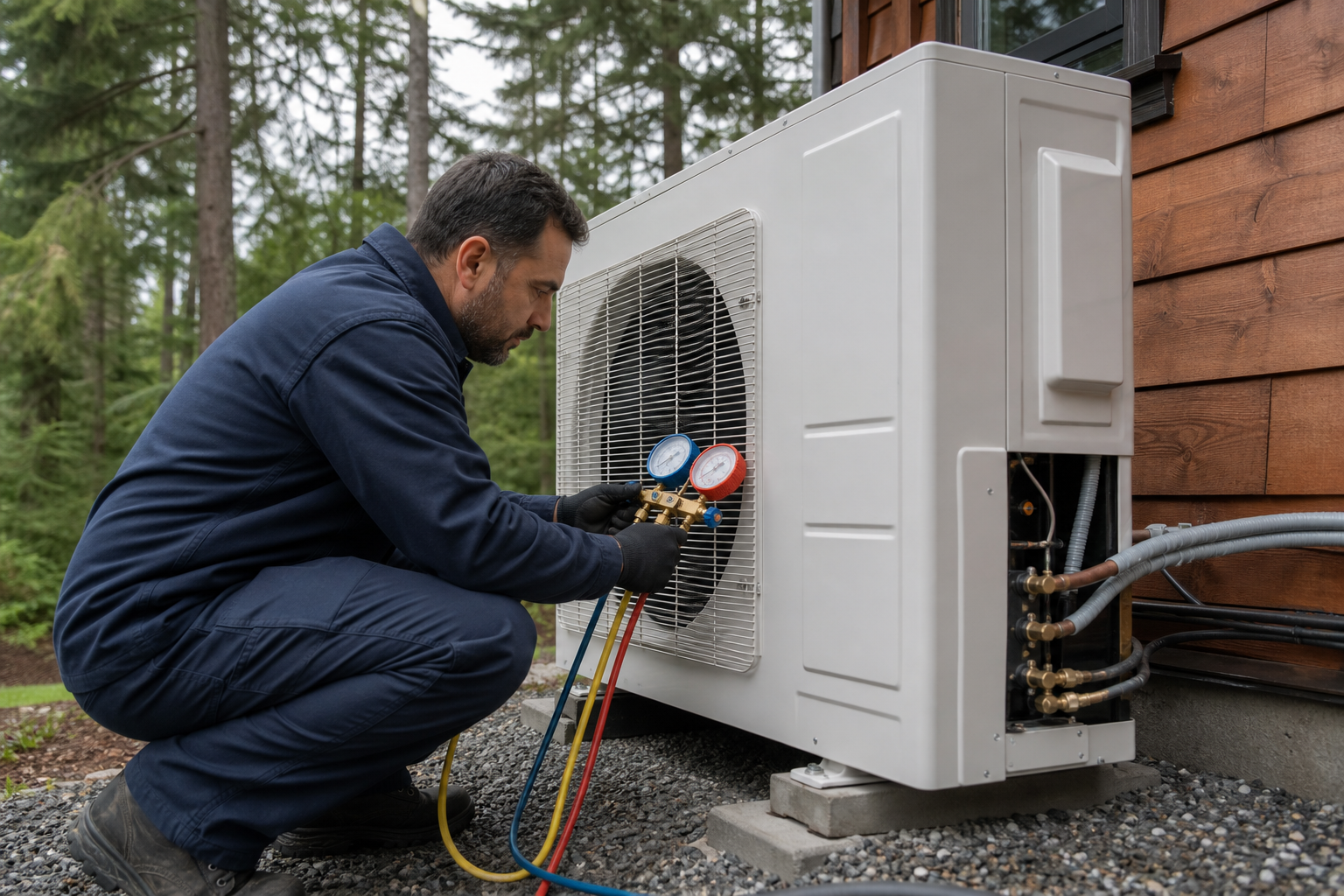
**Inspect the refrigerant charge.** A system that's lost refrigerant loses capacity and efficiency, and runs harder to compensate. This requires a licensed technician with gauges.
**Clean the indoor and outdoor coils.** Coils that are clogged with dust and debris (especially the outdoor coil after pollen season) transfer heat less effectively. A professional cleaning restores efficiency.
**Check electrical connections.** Terminals can loosen over time. A technician checks connections and torques them to spec.
**Inspect the condensate drain.** The indoor unit produces condensate in cooling mode. A blocked drain line causes water to back up into the unit. It's a quick check and worth doing.
**Verify refrigerant line insulation.** The refrigerant lines running between the indoor and outdoor units are insulated. If the insulation has degraded (cracked or missing sections), heat transfer losses increase. Easy to spot and easy to fix.
When to Call for Service
Contact a technician if you notice:
- The system isn't reaching the setpoint on days that aren't unusually cold
- Ice forming on the outdoor unit outside of a normal defrost cycle
- Unusual sounds (grinding, banging, or squealing)
- Water dripping from the indoor unit
- A significant increase in electricity use without a change in weather
These aren't signs of catastrophic failure — but they're signs something needs attention before it becomes a bigger problem.
A Quick Annual Checklist
- Clean indoor filter(s)
- Clear outdoor unit of debris
- Wipe indoor head exterior
- Schedule professional service: coil cleaning, refrigerant check, electrical inspection, condensate drain check
- Test heating and cooling modes before each season
Fifteen minutes of your time twice a year, plus one professional visit, is enough to keep a well-installed heat pump running well for 15 to 20 years.