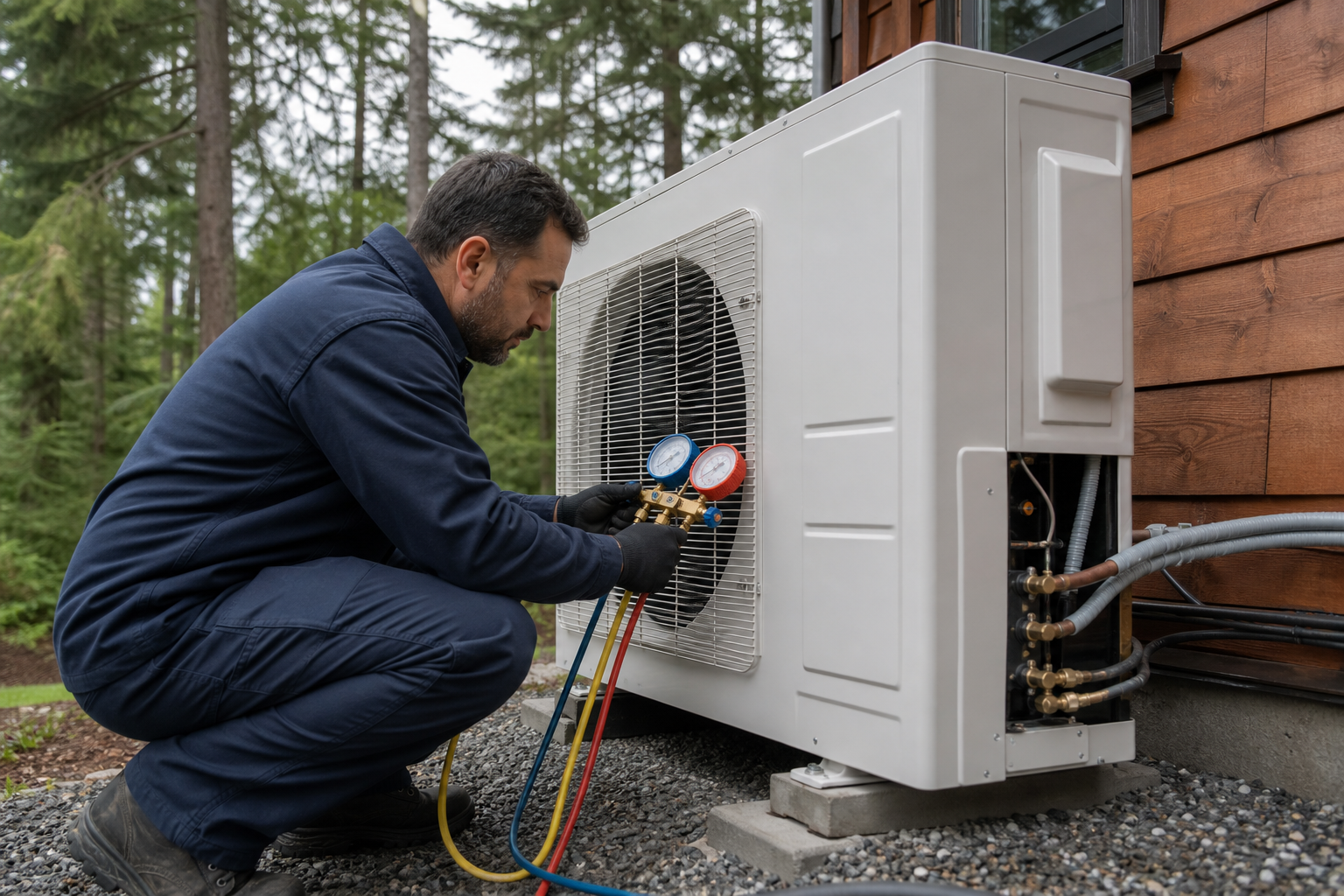
An air conditioner and a heat pump cool the same way. Refrigerant evaporates indoors, picks up heat, and a compressor dumps that heat outdoors. The heat pump adds a reversing valve so the loop can run backward and heat the house. If you are buying cooling for a Burnaby home, that valve is the decision, and it is a smaller decision than the ads suggest. Premier Burnaby Heat Pump Installation treats them as cousins, then looks at the heating plant you already have.
What you keep when you pick the heat pump
Cooling performance follows the compressor, the coil, and the refrigerant charge. A heat pump and an air conditioner built on the same platform, with similar SEER2 ratings, will cool a room to the same temperature and pull similar moisture when they are sized the same way and allowed to run. You do not hand back summer comfort to gain winter heat.
SEER2 is the cooling rating you will see on current equipment. Higher is more efficient across a cooling season. HSPF2 is the heating rating, and it does not apply to a cooling-only unit. Compare SEER2 to SEER2. A number from an old SEER sticker and a number from a SEER2 sticker are not the same test.
Most of the equipment worth installing in this city now is inverter-driven. The compressor slows down instead of slamming on and off. That is a property of the better machines in both categories. A single-stage air conditioner that is too big will cool the air in ten minutes, shut off, and leave the house clammy. An inverter heat pump with the same problem in the sizing sheet will do the same thing. The reversing valve is not what fixes humidity. Runtime does.
Burnaby summer is a moisture problem with a mild thermometer
The city's 2.5% July design numbers are 25°C dry bulb and 17°C wet bulb. Twenty-five degrees does not sound like a crisis next to a Kamloops or Kelowna afternoon. Seventeen degrees wet bulb means the air is holding enough water that a west-facing top floor still feels heavy at 5 p.m. The nights often drop, which is why a lot of houses have survived for decades on a window and a fan, and why those same houses started shopping for cooling after one string of warmer Augusts and a new set of airtight windows.
Size the cooling load to the house, and in this climate let the heating load have a vote if the machine is a heat pump. Burnaby's heating design is -7°C. For most detached houses the heating load is the larger number, so a heat pump sized for January is a bit generous in July. Inverter equipment can turn down and live with that. A single-stage air conditioner sized like a heating plant cannot. It short-cycles, the coil never stays cold long enough to wring the air out, and the house feels cold and damp at the same time. If you only need cooling, size it to the cooling load. If the unit will also be the heater, size it to the heat loss and choose equipment that can modulate. The sizing guide goes further into that.
Defrost, balance points, and step 2 electricity are heating topics. They show up the day you ask the cooling unit to be the furnace too. They are covered properly in heat pump vs furnace. The short version: in this climate a right-sized cold-climate heat pump spends very few hours below its balance point. The backup heat is for those hours and for defrost, if you need backup at all.
Shoulder season is where the air conditioner goes quiet
May and September in Burnaby will hand you a morning at 8°C and an afternoon that wants cooling, sometimes in the same day. An air conditioner sits out the morning. The heat pump flips. That sounds like a small convenience until you have lived with baseboard heaters you do not want to turn on for three weeks, or a furnace that is absurd for a mild morning and then no help at 3 p.m.
Houses on electric baseboard feel this most. The baseboards cost about 14 cents per kWh of heat on BC Hydro step 2, the rate in force in the second half of 2026. A heat pump at a COP of 3 turns that into under 5 cents, and the same heads cool the suite in August. A cooling-only mini-split leaves the baseboard bill untouched all winter. If the wall is being opened anyway, and the outdoor pad is being poured anyway, cooling-only is the option that walks past the larger bill.
Window units and single-hose portables
A window air conditioner is a real air conditioner. It has a compressor and two airstreams, and the hot air leaves the building. Efficiency is usually modest, the window is blocked, security and water leaks are a winter problem if it stays in the frame, and it serves one room. For a rental bedroom you cannot modify, it is a fair tool.
A single-hose portable is a weaker machine than its sticker suggests. It cools room air and blows a share of that air outdoors through the hose. The air it blows out is replaced by warm outdoor air leaking in through every gap. A lot of the nameplate capacity is spent cooling that infiltration. Two-hose portables are better because they use outdoor air for the condenser and leave the room air in the room. A ductless heat pump does the two-airstream job properly, with the compressor outside, and it heats.
If you own the place, a ductless heat pump is the upgrade path from either of those. One head serves the room the window unit was serving, and it can heat it in October without the baseboard. More heads can be added to the same outdoor unit if the capacity is there.
Replacing the outdoor unit beside a gas furnace
This is the job that looks like an air conditioner replacement and should be priced as a heat pump at the same time.
The furnace can stay. A matched heat pump coil goes on it, a heat pump outdoor unit replaces the condenser, and a thermostat that understands dual fuel decides which one runs. Through a Burnaby winter the heat pump will do most of the heating, because the outdoor temperature spends so much time between 0°C and 10°C, where these machines are efficient. The furnace covers the cold snap. You get cooling that is in the same family as the air conditioner you were about to buy.
A few things have to be true, and they are easy to miss on a like-for-like condenser swap.
- The coil, the metering device, and the outdoor unit need to be a matched, listed combination. An old AC coil is not automatically a heat pump coil.
- The furnace control board has to allow the blower to run on a call for heat pump heat, at the right speed. Heat pump airflow is higher and steadier than a lot of older furnace blower setups.
- The electrical circuit sized for the old air conditioner may be too small. Heating load in this climate is larger than cooling load, and the compressor amps follow. Look at the data plate before you reuse the wire.
- Line-set size and length have limits. Reusing a line set means the diameter matches, the length is inside the manufacturer's chart, and the old oil and moisture are dealt with. Sometimes new copper is the cheaper reliable path.
Do that work and the air conditioner quote and the heat pump quote are the same project with a different outdoor unit and a control setup. Skip it and you have a cooling-only condenser on a furnace that still burns gas every mild October night.
When cooling-only is the right buy
Buy an air conditioner, and stop there, when the heating is already solved and you mean to leave it solved.
- The furnace or the boiler is new, efficient, and someone in the house wants it left alone. Read the furnace and boiler pieces before you lock that in, because "new" and "cheap to run against a heat pump" are different claims in this city. Sometimes they line up.
- You are cooling one room in a rental, or a strata unit where an outdoor unit is only allowed as a swap for equipment that is already there and already cooling-only.
- The space is a server closet or a room with a cooling load and no heating job. An air conditioner sized to that load is the simpler machine.
Everywhere else, run the heat pump price before you order cooling-only equipment. The pad, the line set, the electrical, and the indoor coil are the expensive parts, and they are shared. The heating you skip is the part Burnaby actually uses eight or nine months of the year.
Filters and outdoor coils are the maintenance on both. Keep the filter clear so the coil stays cold enough to dehumidify. Keep the outdoor coil free of cottonwood and dryer lint. A heat pump will also ask you to leave it uncovered in winter so it can defrost. An air conditioner can wear a cover once the heating season is someone else's problem. That is a fair summary of the difference: one of them is done in September, and the other one works on the wet 3°C nights that make up a Burnaby winter.